Quick answer
If a balloon payment is due on business vehicle or equipment finance and you can't pay it, you usually have five ways out: ask your financier to refinance or extend it, refinance with another asset financier, sell or trade the asset, cover it with an unsecured business loan, or use a property-secured loan. Start at least 30 days out — the payout figure, valuation and PPSR steps take time.
Key points
- A balloon is a contractual due date, not a soft target — missing it is a default
- Five realistic exits, from a few hours to a few weeks
- Your payout figure and the asset's real value decide which options are open
- Starting 30 days early turns a crisis into a routine refinance
If a balloon payment is due on your business vehicle or equipment finance and the cash isn’t there, you have five realistic ways out: refinance or extend with your current financier, refinance with a different asset financier, sell or trade the asset, cover the balloon with an unsecured business loan, or use a property-secured loan. Which one works depends on three things — your payout figure, what the asset is worth today, and how many days you have left.
This guide sets out what each option involves, how long it realistically takes, and the steps that stall it. If your due date is close, skip to the countdown table.
What is a balloon payment, and why does it catch owners out?
A balloon is the lump sum left at the end of a chattel mortgage, hire purchase or similar agreement. business.gov.au describes it as “a final lump sum payment due on a loan agreement” — the trade-off for lower regular repayments over the term (see their key financial terms).
It catches owners out for predictable reasons:
- It was set four or five years ago. The agreement was signed when the truck, ute or excavator was new and the business plan looked different.
- Nothing reminds you until late. Many financiers send an end-of-term letter only weeks before the date.
- The asset is worth less than you assumed. Kilometres, hours and market prices all move. A balloon set at 30% of the original price can be close to, or above, what the asset would fetch today.
- The cash went elsewhere. A slow quarter, an ATO bill or a big job that paid late is enough to absorb the money you’d planned to set aside.
None of this is unusual. What matters is acting before the due date, not after.
What happens if the balloon isn’t paid on the day?
The balloon is a contractual repayment like any other — just larger. If it isn’t paid when due:
- The loan is in arrears or default from that date. Default interest and fees may apply under your contract.
- The financier issues formal notice. The timing and wording depend on the contract and the type of finance.
- Your credit file can be affected. Repayment history and defaults can be reported, which makes the next application harder.
- The asset can be repossessed. The financier’s interest is registered on the Personal Property Securities Register (PPSR), and the vehicle or machine is their security.
Most financiers would much rather agree a plan than repossess a working truck. That flexibility shrinks fast once the date has passed, which is why the best move is to call them while you’re still current.
The five ways to clear a balloon, compared by speed
| Option | Realistic timing | What decides the speed | Best when |
|---|---|---|---|
| Refinance or extend with your current financier | A few days to two weeks | Their internal review queue, your repayment history | Your record is clean and the asset still has life in it |
| Refinance with another asset financier | Several business days to two weeks | Payout letter, asset valuation or inspection, PPSR search | Your financier says no or offers a poor structure |
| Sell or trade the asset | One to four weeks or more | Finding a buyer, payout and PPSR discharge timing | You don’t need the asset, or you’re upgrading anyway |
| Unsecured business loan | Same day possible for smaller amounts | Bank statements, turnover, how clean the file is | The balloon is modest and the business trades well |
| Property-secured business loan | $20k to $250k possible same day; up to $5m possible within 24–48 hours | Property details, valuation, signing logistics | Larger balloons, several balloons at once, or a tight deadline |
Speed is “possible”, never promised — every file is different. But the pattern holds: the options that rely on the asset itself take longer, because someone has to value the asset and sort out the existing registration first.
Option 1: ask your current financier to refinance or extend
This is the obvious first call, and often the cheapest in dollars. Ask specifically:
- Will they refinance the balloon into a new term, and over how long?
- Will they need a fresh valuation or inspection of the asset?
- What will the new monthly repayment be, and the total cost in dollars?
- Is there an establishment fee or documentation fee on the new agreement?
Their answer depends on the asset’s age and condition, your repayment history and the business’s current trading. A ten-year-old prime mover with high kilometres may fall outside their policy even if you’ve never missed a payment. Get the answer in writing, and get it early — if it’s a no, you need time for the other options.
Option 2: refinance with a different asset financier
A new financier will pay out your existing contract and write a new one. To do that they need:
- A payout letter from your current financier, valid to a specific date.
- Asset details — make, model, VIN or serial number, kilometres or hours, condition, photos.
- A valuation or inspection, depending on the asset and the amount.
- A PPSR search to confirm what’s registered against the asset.
When the payout is made, the old financier must remove its registration. The PPSR guidance is that registrations should be ended “as soon as practicable”, generally within five business days of the security interest ending (PPSR — End a registration). A new lender will want its own registration in place, so those steps sit on the critical path.
Our equipment and vehicle funding page covers how asset-secured and property-secured options compare.
Option 3: sell or trade the asset
If you no longer need the vehicle — or you were planning to upgrade — selling or trading can clear the balloon outright. Watch for two things:
- The gap. If the sale price is lower than the payout, you still owe the difference. A dealer trade-in may simply roll that shortfall into the next contract, which makes your next balloon worse.
- The timing. A private buyer won’t hand over money until the financier confirms the payout and the registration is cleared. That handshake takes days, and buyers can walk away.
Selling is a strong exit if there’s equity in the asset and you have weeks, not days.
Options 4 and 5: pay the balloon with a business loan
Here the asset becomes yours outright and the debt moves to a business loan instead. The two common routes are:
Unsecured or cash-flow lending. Typically $5,000 to $500,000, sized on turnover and bank statements. Same-day funding is possible for smaller amounts. It suits a modest balloon where the business trades well and the bank statements tell a clear story. See fast unsecured business loans.
Property-secured lending. From $20,000 to $5,000,000 over residential or commercial property, using first mortgages, second mortgages or caveats. $20k to $250k is possible same day; larger amounts up to $5m are possible within 24–48 hours. It suits bigger balloons, a fleet with several balloons falling due together, or a file where the asset’s age rules out an asset financier.
The trade-off is that the security or the repayment basis changes. Before you sign, put the offer into the loan cost calculator and compare total dollars, not just the weekly figure.
If your balloon is due within the month and you want to know which of these is realistic for you, a short enquiry gets a specialist looking at it.
The countdown: when to do what
| Days before the due date | What to do |
|---|---|
| 90 | Find the agreement and confirm the exact balloon amount and due date. Check what the asset is worth today. |
| 60 | Call your financier and ask about refinance or extension terms. Start tidying bank statements and BAS. |
| 45 | If the answer is no, or the terms don’t suit, start a second option in parallel — another financier, a sale or a business loan. |
| 30 | Request a written payout letter. Gather asset details and photos. Use the documents checklist. |
| 14 | Have a firm approval or a signed sale contract. Confirm signers are available. |
| 7 or fewer | Treat it as urgent: property-secured and smaller unsecured options are the fastest routes left. Call your financier so they know a payout is coming. |
The single most expensive mistake is waiting for the financier’s end-of-term letter. By the time it arrives, the 30-day steps are already late.
A worked example (illustrative)
This is an illustrative scenario, not a client file.
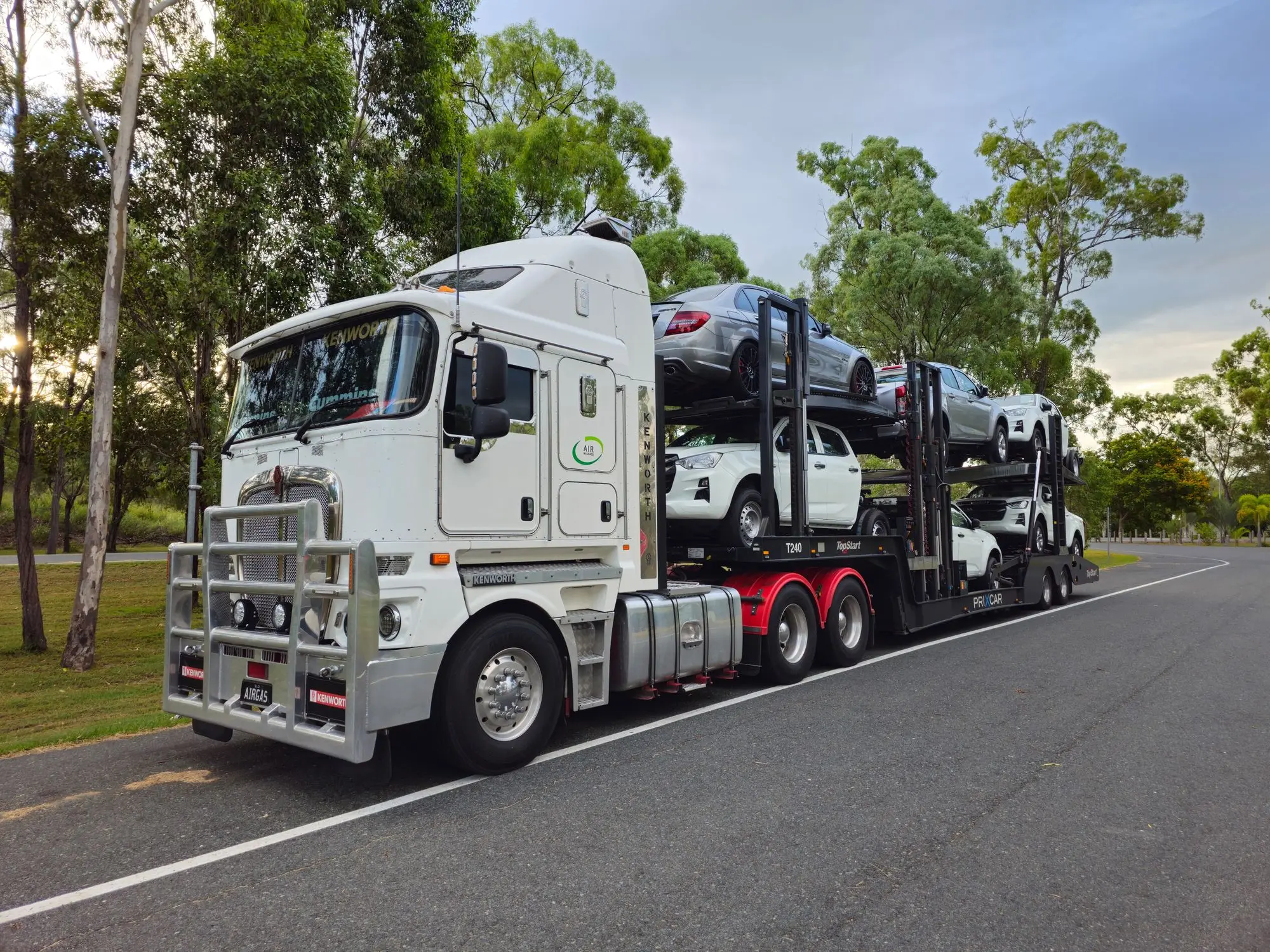
A Brisbane car-transport operator runs three prime movers. The balloon on one — about $68k — falls due in five weeks. Their financier will refinance it, but only over two years because of the truck’s age, and the new repayment would strain cash flow through the quiet January period.
The owner starts two tracks at once:
- A payout letter and a written refinance offer from the current financier, as a fallback.
- An enquiry for a property-secured loan against equity in the family’s investment unit, so the balloon is paid in full and the truck is owned outright.
The property route needs a valuation, the payout letter and signatures from both owners of the unit. Because the paperwork starts five weeks out, nothing is rushed: the loan settles a week before the due date, the financier is paid, and its PPSR registration is ended. The owner compares both offers in dollars before choosing, and builds the repayment into their 13-week cash flow forecast.
The lesson isn’t which option won. It’s that two tracks, started early, meant the owner chose instead of being forced.
What slows a balloon refinance down?
- No payout letter, or one that expired yesterday.
- Asset details that don’t match — a wrong VIN, unrecorded modifications, or a body or crane fitted after purchase.
- A second registration on the PPSR that the owner forgot about, such as a general security agreement.
- Arrears in the last few months, which make every lender look harder.
- Unlodged BAS, or bank statements that don’t line up with what the form says.
- Owners unavailable to sign when property is involved.
Most of these are fixable in a day if you find them early. Found the day before the deadline, each can push funding back. Our guide to planning the exit before you borrow explains how to avoid replacing one balloon with another.
Stop this happening on the next asset
- Diarise every balloon date across the fleet, with a reminder 90 days out.
- Set the balloon at a level the asset is realistically worth at the end of the term — not simply the one that makes repayments lowest.
- Put a small amount aside each month toward it, or plan the refinance from day one.
- Read the end-of-term terms before signing. business.gov.au’s guide to leasing or buying vehicles and equipment is a useful starting point. Transport operators can also see our transport and logistics page.
Clear the balloon and keep the truck working
A balloon falling due is a timing problem more than a money problem, and timing problems are what we deal with every day. Enquiring takes about 60 seconds and involves no credit check when you first enquire. We don’t send your details to a pile of lenders — no spray and pray, and no phone running hot with strangers. A real person reads your situation, looks at the asset, the due date and any property you can offer, and calls you to talk through the fastest sensible route.
Please fill the form in accurately — the balloon amount, the due date, what the asset is and what you’d use as security — so we can line up the right option the first time instead of the second.
Frequently asked questions
What happens if I don't pay a balloon payment on time?
The loan is in default from the due date. The financier will usually issue a formal notice, default interest and fees can start, the default can be reported on your credit file, and because the asset is security the financier can ultimately repossess it. Contacting them before the due date keeps far more options open.
Can I refinance a balloon payment?
Often, yes. Many financiers will refinance the balloon into a new term, and other asset financiers can take it over. Approval depends on the asset's current value and age, your repayment history and how the business is trading. Older or high-kilometre assets narrow the field.
How fast can a balloon payment be refinanced?
With your existing financier it can take days to a couple of weeks. A new asset financier typically needs a payout letter, an invoice or valuation and a PPSR search, which commonly takes several business days. A business loan can move faster: same-day funding is possible for smaller unsecured amounts, and $20k to $250k is possible same day when secured by property.
What if my vehicle is worth less than the balloon?
Selling it won't clear the debt on its own, and refinancing against the asset alone may fall short. The gap has to come from cash, an unsecured loan or equity in property. Get a realistic trade or wholesale value early so you know the size of the shortfall.
Do I need a payout letter before applying for funding?
You can enquire without one, but any lender paying out the balloon will need a written payout figure from your financier, valid to a specific date. Request it as soon as you start planning, and again closer to settlement if it expires.
Can I use a property-secured loan to pay a balloon on a truck?
Yes, if the money is for business purposes and there is enough equity. Property-secured options range from $20,000 to $5,000,000 over residential or commercial property, and the truck is then owned free of finance.